Why We Often Recommend Diamonds Under 2 Carats | Less is More Series
Why We Often Recommend Diamonds Under 2 Carats
One of the most common questions when choosing an engagement ring is also one of the hardest to answer:
What carat size diamond should I get?
There is no universally correct diamond size. Hands are different. Budgets are different. Personal style is different. And despite what the internet occasionally suggests, an engagement ring does not need to be visible from across a parking lot.
But if you ask us for a starting point?
We really like diamonds under 2 carats.
Not because 2 carats is some magical cutoff, and certainly not because we have anything against large diamonds. We use plenty of them.
We like this range because it works remarkably well, remarkably often.
Under 2 Carats Is Flattering on Almost Everyone
Diamond carat weight and visual size aren't exactly the same thing. Shape, proportions, cut and finger size all affect how large a diamond actually appears on the hand.
That said, diamonds somewhere below the 2-carat mark tend to occupy a particularly flattering middle ground.
There is enough presence for the center stone to feel substantial, but it generally doesn't overwhelm the hand or the setting around it. That makes this range especially versatile across different finger sizes and ring styles.
It also leaves room for the design to be part of what you notice.
And we're jewelry designers. We admittedly care quite a lot about that part.
Your Budget Can Do More
Carat weight is one of the major factors affecting diamond price, and certain benchmark weights can command meaningful premiums.
Staying below 2 carats can give us considerably more flexibility when sourcing a diamond.
Instead of concentrating the budget primarily on size, we can look at the entire stone: cut, color, faceting, proportions, shape and overall character.
This is especially useful with natural diamonds and antique cuts, where we may happily choose a slightly smaller stone because it has the better outline, prettier faceting or more interesting personality.
A 1.6-carat diamond you love is a better purchase than a 2-carat diamond you chose because the number felt important.
It's a Very Wearable Size
This part isn't particularly glamorous, but it matters.
You have to actually wear the thing.
For most people, an engagement ring is going to encounter sweaters, pockets, gloves, desks, grocery bags, pets, gym bags and whatever else constitutes an ordinary Tuesday.
As center stones become larger, rings can become more cumbersome. Depending on the setting and stone proportions, they may sit higher, catch more easily or simply feel more noticeable during everyday activities.
Diamonds under 2 carats can still have plenty of visual impact without requiring quite as much accommodation from the person wearing them.
We like beautiful jewelry.
We like beautiful jewelry you can comfortably live your life in even more.
Carat Weight Doesn't Tell You How Big a Diamond Will Look
This is where shopping strictly by carat weight gets a little misleading.
Carat is a measurement of weight, not dimensions.
Two diamonds with exactly the same carat weight can face up very differently depending on their shape and proportions.
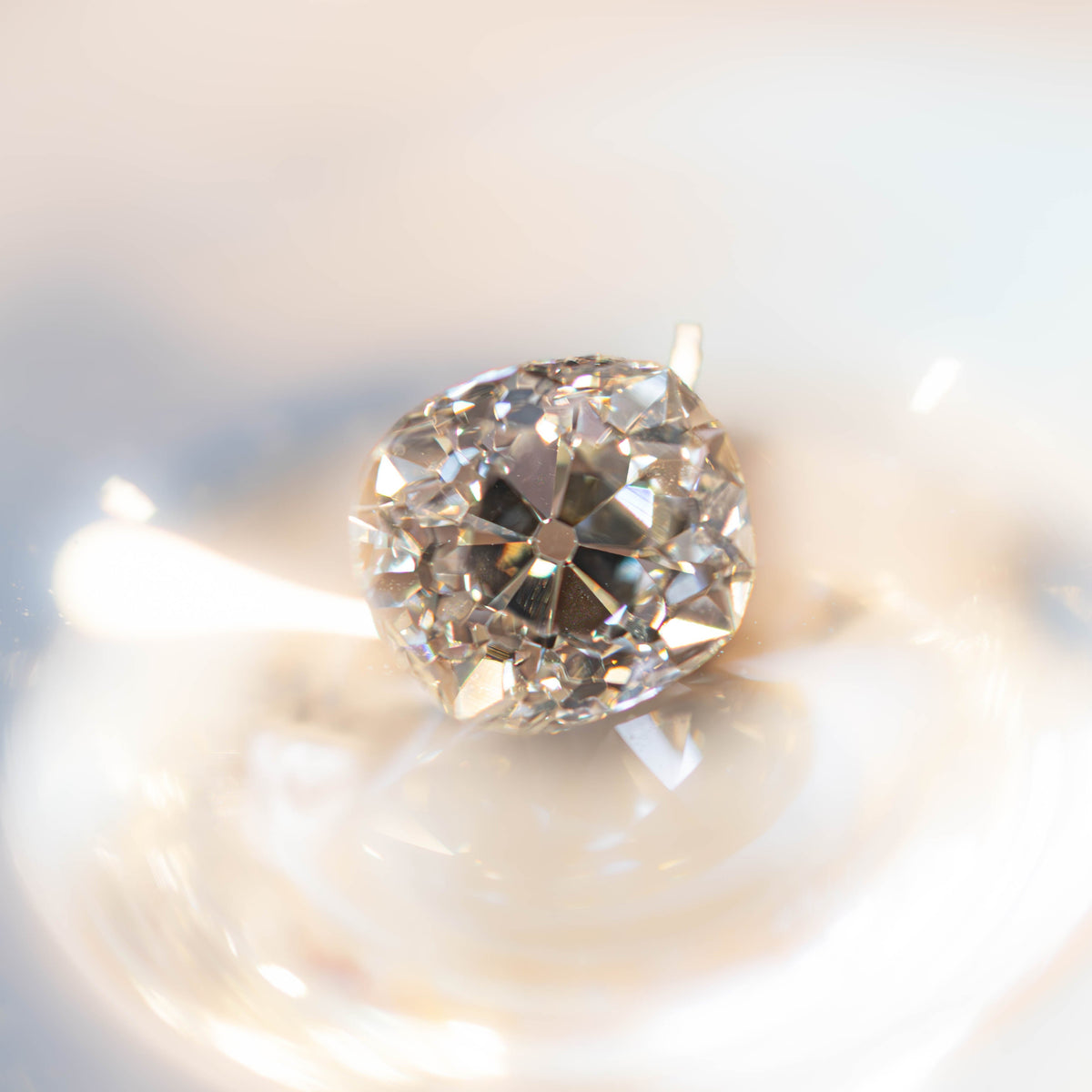
An elongated 1.7-carat oval, pear or moval may have considerable finger coverage. A deep 1.7-carat old mine cut may carry more of its weight vertically and appear smaller from above. Even two stones of the same shape and weight can have noticeably different measurements.
This is one reason we don't recommend choosing a diamond based on the carat number alone.
Look at the measurements. Look at the proportions. And most importantly, look at the actual diamond.
The Setting Changes Everything
A diamond also doesn't exist in isolation once it's on your hand.
The architecture surrounding it can dramatically change its presence.
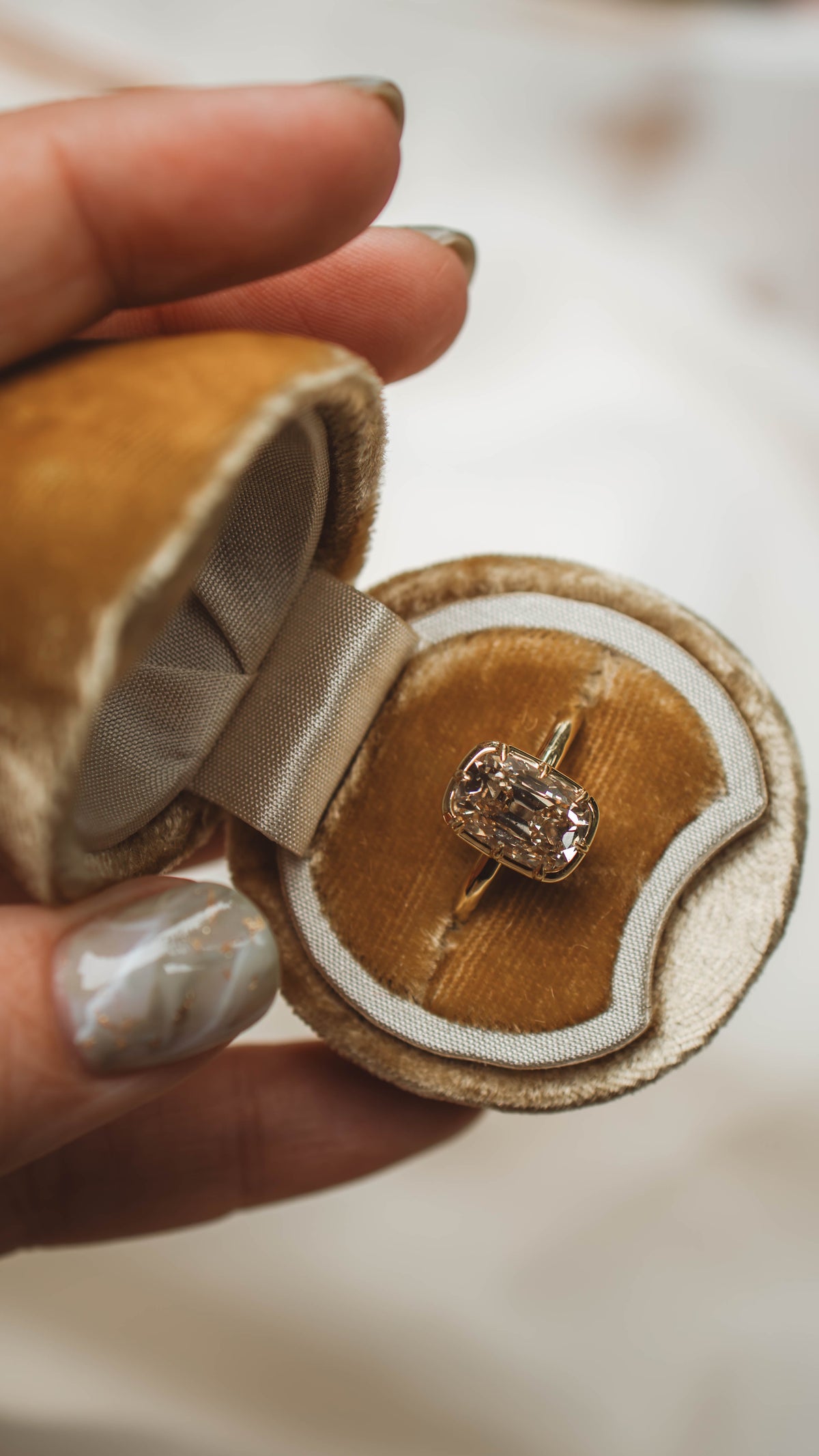
A bezel can give a smaller stone more visual weight. A substantial band changes the proportions of the entire ring. Side stones can create width across the finger without requiring an enormous center diamond. An architectural basket can make the ring itself feel significant even when the center stone is relatively restrained.
This is one of our favorite things about designing jewelry: impact does not have to come entirely from carat weight.
Sometimes a 1.5-carat diamond in the right setting has far more presence than a larger diamond in a setting that isn't doing much for it.
So, What Is the Best Diamond Carat Size?
There isn't one.
But if you don't know where to begin, we think the area between roughly 1 and 2 carats is an excellent place to start looking.
It works across a broad range of hands. It gives you meaningful flexibility with budget. It's practical enough for everyday wear. And there is still plenty of room to create a ring with real presence.
From there, you can go smaller. You can go bigger. You can decide you want a 4-carat old mine cut because restraint has suddenly lost all appeal.
We're certainly not going to stop you.
But when the number of options starts making the decision harder rather than easier, forget the milestone for a moment.
The best diamond isn't the one that reaches an arbitrary carat weight.
It's the one that makes sense on your hand, in your budget, and in the piece you're actually trying to create.